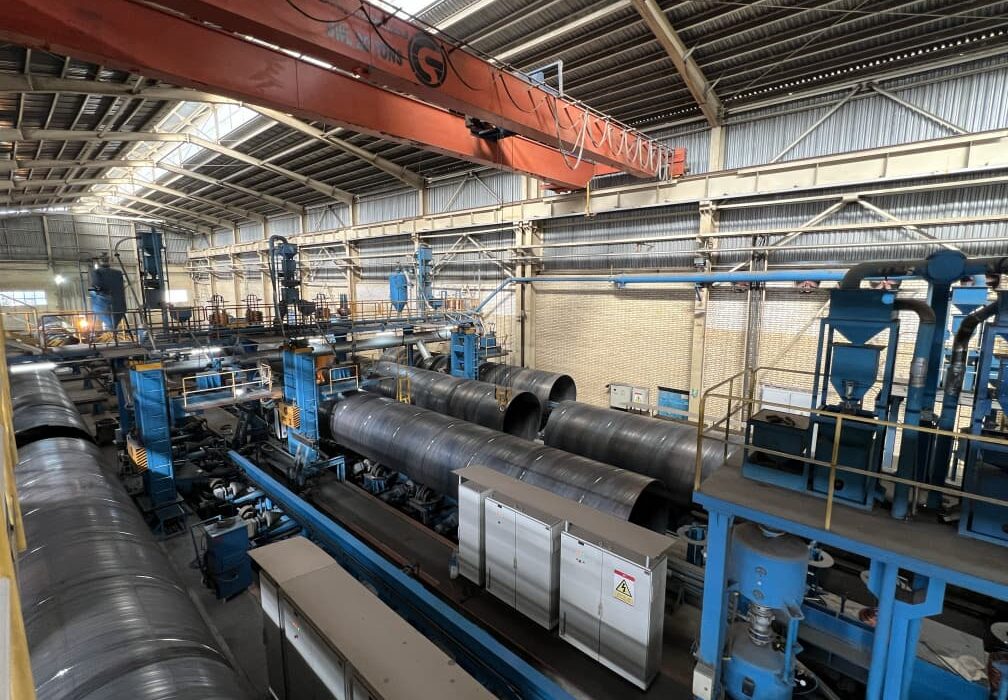
By smartly selecting the material, diameter, thickness, and production standards of spiral pipes, you can reduce both the initial cost of installing the transmission line and minimize operational and maintenance expenses throughout the project’s lifetime. This selection should be based on a “Life Cycle Cost” perspective, not just the price per meter of pipe.
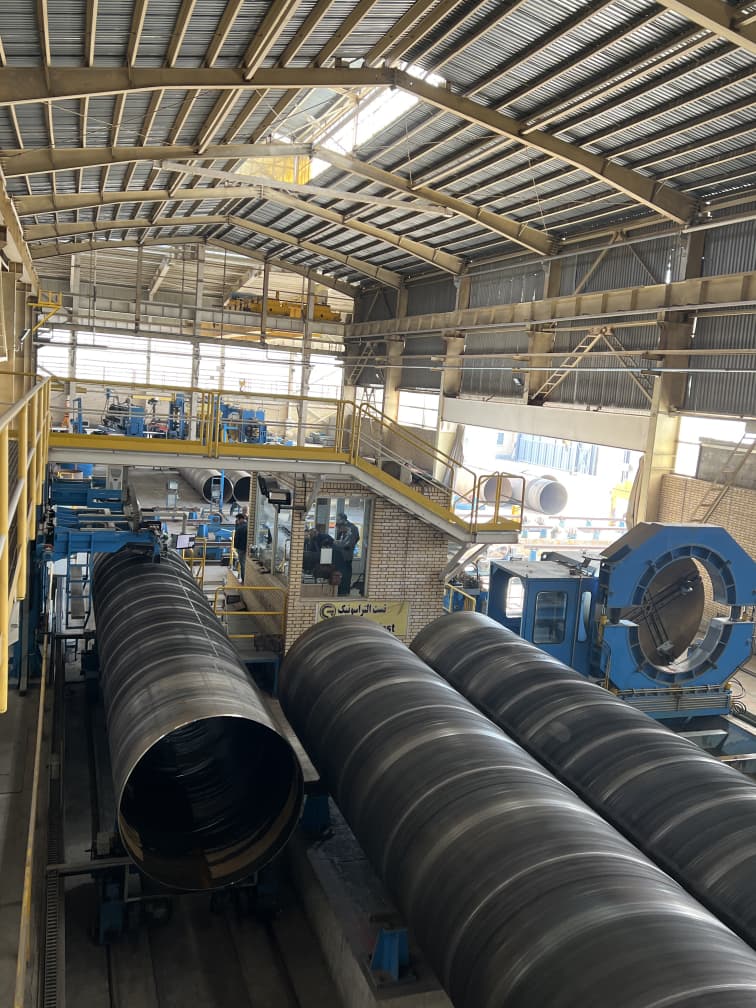
Why are spiral pipes more economical in many projects?
Spiral pipes (used for air or fluids under low to medium pressure) noticeably reduce installation costs due to their lighter weight, longer segment lengths, and fewer supports needed. Studies in the duct industry show that using circular spiral cross-sections can reduce installation costs by approximately 30 to 50 percent compared to rectangular or heavier alternatives because less material is used and installation is faster and simpler.
In air transfer systems, the circular design and relatively smooth internal surface reduce pressure loss, which lowers the fan power requirement and energy consumption, directly impacting operational costs. For fluid transmission lines (water, sewage, slurries, etc.), proper design of spiral pipe thickness and diameter, based on pressure, soil load, and installation conditions, achieves the desired safety with minimal steel consumption.
Three main cost reduction categories: material, installation, and operation
True cost reduction requires considering all three simultaneously:
Material and fabrication
Using appropriate-grade steel (not necessarily the highest available) and choosing thickness based on stress calculations can save several percent on steel consumption.
In air ducts, a spiral circular section provides a more efficient cross-sectional area for a given flow rate compared to rectangular sections, requiring less material and reducing raw material costs.
Installation and execution
The lighter weight and longer lengths of spiral pipes reduce the number of supports, flanges, and intermediate joints, significantly lowering installation time and cost.
Thanks to the circular geometry and standardized joint systems, many projects require fewer labor and equipment resources than heavier or rectangular systems.
Operation and maintenance
Lower leakage rates at spiral welds and joints (compared to some seam-welded systems) reduce energy losses and pump or fan capacity requirements, saving significant costs over the project lifespan.
For pressurized lines, proper thickness design based on criteria like diameter-to-thickness ratio and limiting tensile stress to a percentage of steel yield strength reduces the likelihood of failure and costly repairs.
Comparison of correct vs. incorrect spiral pipe selection
The table below briefly compares two common approaches: “quick choice based on price per meter” and “engineering choice based on life cycle cost.”
| Key Aspect | Selection Based on Price per Meter | Engineering Selection Based on Life Cycle Cost |
|---|---|---|
| Main purchase criterion | Cheapest price per meter | Lowest total cost for purchase, installation, operation |
| Thickness & steel grade | Sometimes thicker or higher grade than necessary without precise calculation | Determined by pressure, soil load, D/t ratio, allowable stress limit |
| Diameter design | Smaller diameter to reduce length and weight but with high pressure drop | Optimized diameter based on allowable pressure drop and pump/fan power |
| Type and quality of fittings | Cheap, leaky fittings without attention to sealing class | Standard fittings with limited leakage or self-sealing systems if needed |
| Installation cost | Appears low but longer installation time and more supports needed | Shorter installation, fewer supports, 30–50% potential installation cost reduction |
| Energy and operation cost | Higher energy use due to pressure drop and more leakage | Lower energy use due to reduced pressure drop and leakage |
| Failure risk & repairs | Higher risk of cracks, leaks, or early wear due to improper design | Higher service life, with scheduled maintenance possible |
Five practical steps to reduce transmission line cost with spiral pipes
Define technical project requirements precisely
Specify flow rate, operating pressure, fluid temperature, type of soil or support structure, route length, number of bends, and space constraints.
More accurate input enables better optimization of spiral pipe diameter and thickness, avoiding extra costs from conservative design.Choose an optimal diameter rather than the smallest possible
Reducing diameter lowers price per meter but raises pressure drop, pump or fan cost, and energy consumption over the pipeline’s life.
Hydraulic and aerodynamic calculations help select a diameter minimizing total cost of pipe, installation, and energy over the economic life of the line.Design thickness based on engineering standards, not market conventions
For pressurized or buried lines, factors like diameter-to-thickness ratio, hoop stress from internal pressure, external loads, and minimum bend radius must be observed to ensure safety and avoid over-thickness.
Pipe design guidelines recommend limits like D/t≤80 and restricting stress to a percentage of yield strength, helping choose an “optimal and safe” thickness.Focus on weld seam and joint quality to reduce hidden costs
Low-quality spiral welds or butt joints can cause leaks, local corrosion, or early failure, leading to repair and downtime costs far exceeding initial savings.
Adopting recognized standards for non-destructive testing, weld quality control, and selecting fittings with proper sealing classes prevents future expenses.Choose a supplier with a life cycle cost approach—the role of Mahyar Sepahan
Working with a manufacturer who also offers engineering consultation on diameter, thickness, connection type, and supports helps control costs beyond installation, including energy and maintenance.
Mahyar Sepahan, focusing on producing spiral pipes per international standards and engineering solutions, helps clients choose economically optimal solutions across the project lifetime rather than the cheapest option now.
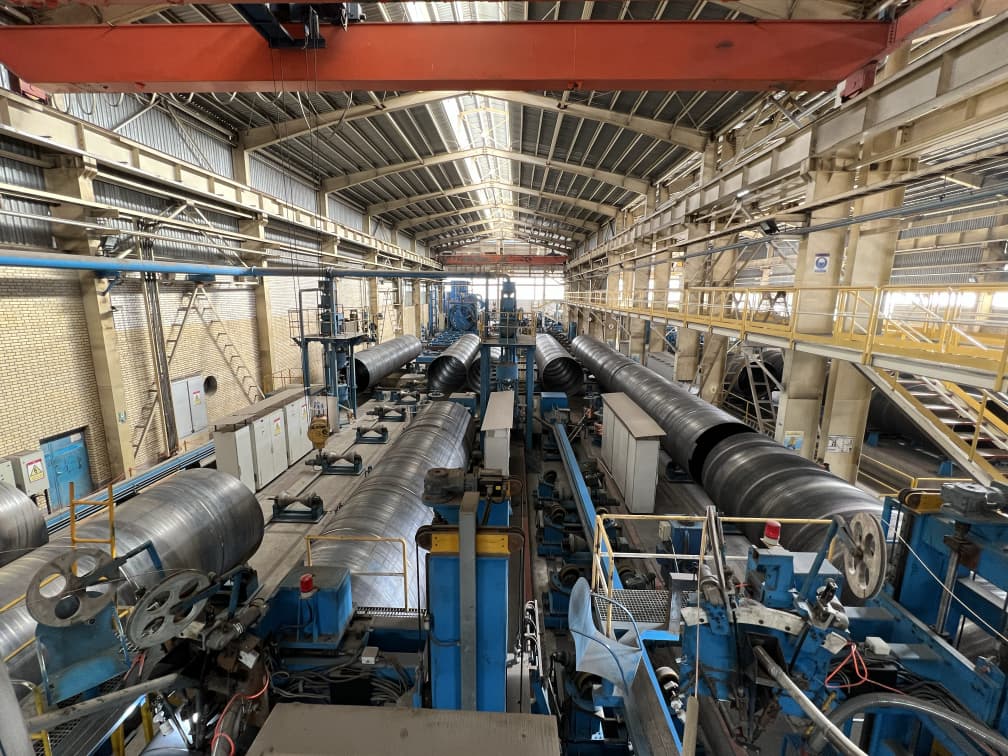
Common mistakes increasing spiral pipe costs
Many clients and contractors choose pipes based only on initial price, uncovering hidden costs after startup. Common missteps include:
Ignoring actual operating conditions (e.g., failing to use corrosion-resistant coatings or higher-grade steel for outdoor exposed lines) causing expensive repairs or replacements later.
Over-thickening pipes above need, increasing weight and support costs without proportional safety benefit.
Neglecting energy costs by choosing smaller diameters and winding pathways, leading to higher pressure drops requiring oversized, high-energy pumps/fans.
Missing execution details at purchase, such as joint type, sealing class, support type, and bend radius, resulting in costly last-minute purchases and design changes.
Correcting these later is harder and more expensive than preventing them at design and procurement.
How to optimize transmission line costs from the bidding stage?
Bids tend to focus on price per meter but poorly written tender documents can push contractors toward poor decisions. Suggestions for optimization:
Specify exact technical criteria in tender documents, including allowable pressure drop, leakage class, system minimum efficiency, and design life beyond just nominal diameter and pipe material. This forces vendors to provide engineering-based bids rather than price-cutting.
Request technical-financial proposals based on life cycle costs including equipment price plus energy and maintenance cost over 10-20 years, highlighting truly economical solutions.
Assign scores for quality and producer experience separately from price, rewarding manufacturers investing in quality control, weld testing, and after-sales service.
Mahyar Sepahan can act as a technical consultant for employers or contractors during tendering to ensure specifications minimize life cycle cost, not just the lowest bid price.
Projects with the greatest savings from spiral pipes
While spiral pipes suit many applications, economic advantage is strongest for:
Long transmission lines with repetitive cross-sections, where small per-meter savings accumulate substantially.
Projects with tight deadlines, where faster production and installation reduce overhead costs and delay penalties.
High-flow air duct systems in industrial ventilation, mines, tunnels, and large warehouses, where circular spiral sections reduce pressure drop and improve sealing, lowering energy and maintenance costs.
Buried lines with controlled backfill, enabling optimized thickness design and weld quality for weight reduction and structural performance.
Experienced companies like Mahyar Sepahan leverage past projects and lessons learned to propose the most economical solutions by comparing new projects to similar cases.
Mahyar Sepahan’s role in minimizing project risk and cost
Beyond technical and economic principles, success requires a reliable industrial partner. Benefits of working with Mahyar Sepahan include:
Reverse engineering costs: Starting from budget and performance requirements to propose a combination of diameter, thickness, material grade, and connections that delivers acceptable performance within budget.
Production to recognized standards: Ensuring materials, welding, non-destructive tests, and dimensional controls reduce early failure risk and allow confidence in design life.
Flexibility in length and connections: Offering variable lengths and a variety of joints (flanged, coupling, male–female) eases design, reduces onsite waste, and lowers installation time and cost.
Support from design to commissioning: Technical team involvement from size and thickness selection to field visits and installation supervision minimizes errors and catches issues before they become costly.
This approach makes Mahyar Sepahan more than a supplier—it is a technical project partner aligned with the long-term performance and success of the entire transmission line.
Practical summary for decision-makers
In a few actionable points for project managers, clients, and contractors:
Think of the cost per meter over the pipeline’s lifetime, including purchase, installation, energy, and maintenance, rather than the initial price per meter alone.
Avoid overly conservative choices in thickness and grade that increase weight and price without real safety benefit; rely on engineering calculations and standards instead of market habits.
Treat weld quality, fittings, coatings, and sealing as core financial decision factors, not peripheral costs; many large future expenses start from these small details.
Choose producers like Mahyar Sepahan who provide technical consultation alongside manufacturing to reduce project risk and maximize performance and service life within your budget.