In civil engineering projects, water transmission systems, oil and gas pipelines, and industrial infrastructure, pipes are not merely simple metallic components; they are critical elements of the system, and the overall performance of a project depends heavily on their quality. Among the various types of steel pipes, spiral welded pipes have gained a prominent position in large-scale projects due to their ability to be manufactured in large diameters, their cost efficiency, and their favorable mechanical behavior.
However, from an engineering perspective, the main question is not what a spiral pipe is, but rather which factors determine its final quality. In this article, we place spiral pipes under the engineering microscope and examine the key parameters that influence their real-world quality and performance.

Spiral Pipe Quality: A Concept Beyond Appearance
Content list
The quality of a spiral pipe is not limited to surface smoothness or visual uniformity. From an engineering standpoint, quality means:
The ability to withstand design pressure
Stable performance under real environmental conditions
Long service life
Minimal maintenance requirements
These characteristics are the result of a series of technical decisions made from the design stage through manufacturing and installation.
Parameter One: Raw Material Quality
The Role of Steel Plates in Final Quality
The most critical factor determining spiral pipe quality is the steel plate used in production. The chemical composition, microstructure, and mechanical properties of the steel plate directly affect:
Tensile strength
Toughness
Weldability
Resistance to cracking
Steel plates selected in accordance with international standards such as API, ASTM, or EN provide a reliable foundation for producing high-quality spiral pipes.
Parameter Two: Accuracy of Engineering Design
Why Design Is More Than Diameter and Thickness
From a non-technical viewpoint, pipe selection may seem limited to diameter and wall thickness. Engineers, however, know that proper design involves many additional parameters, including:
Operating pressure and maximum pressure
Type of conveyed fluid
Operating temperature
Soil and environmental conditions
Pipeline length and external loads
Neglecting any of these factors can lead to improper pipe selection and a decline in performance over time.
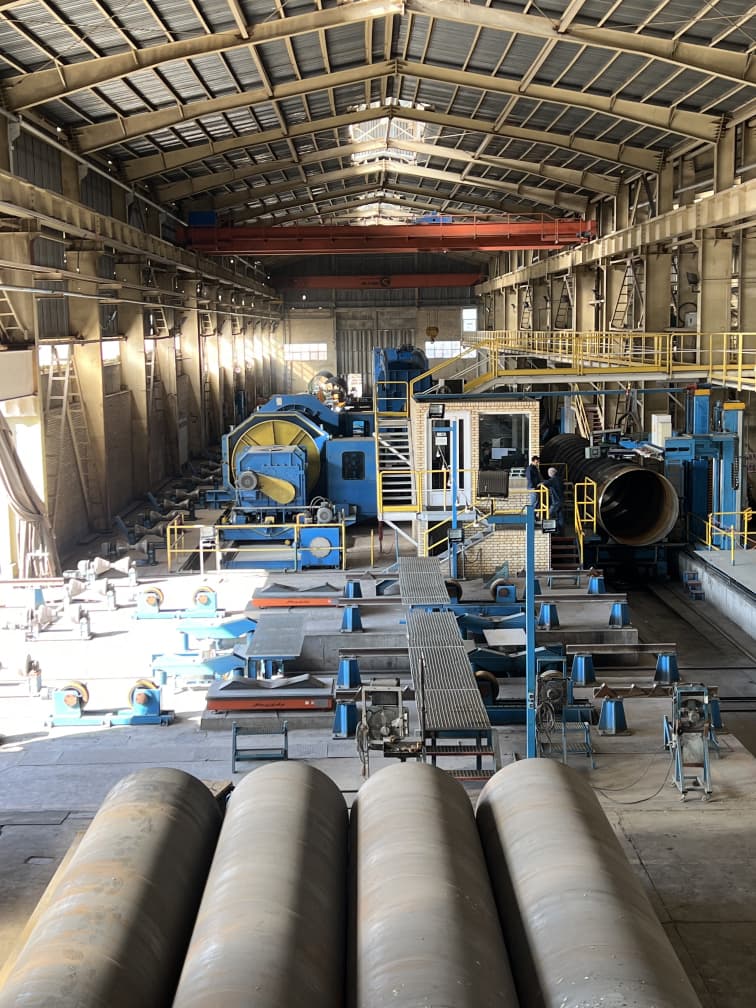
Parameter Three: Spiral Forming Process
The Importance of the Forming Angle
In spiral pipe manufacturing, the forming angle of the steel plate plays a vital role. This angle determines:
How stresses are distributed along the pipe body
How the weld seam behaves under pressure
An incorrect forming angle can cause stress concentration and reduce the mechanical strength of the pipe. Manufacturers who pay close attention to this parameter deliver products with more stable performance.
Parameter Four: Welding Quality
The Core of Spiral Pipe Quality
The weld seam is the most critical area of a spiral pipe from an engineering perspective. Welding quality depends on several factors:
Welding method (such as SAW)
Current and voltage parameters
Operator skill
Quality of welding consumables
Proper welding results in:
Full penetration
Uniform strength
Reduced risk of cracking and leakage
during operation.
Parameter Five: Quality Control and Testing
Engineers’ Trust Is Built Through Testing
No spiral pipe can be considered reliable without rigorous testing. Common tests include:
Non-destructive testing (UT, RT)
Hydrostatic pressure testing
Dimensional and geometric inspections
These tests ensure that the pipe is not only compliant with standards on paper but also dependable in real operating conditions.
Parameter Six: Coating and Corrosion Protection
Quality Without Protection Does Not Last
Even the best steel is vulnerable to corrosion. The selected coating system must be appropriate for:
The type of conveyed fluid
Environmental humidity
Soil chemical composition
Epoxy, polyethylene, and FBE coatings each have specific applications, and incorrect selection can significantly reduce the final quality and service life of the pipe.
Parameter Seven: Transportation and Storage
Details Often Overlooked
Mechanical damage caused by improper transportation can negate all manufacturing efforts. Impacts, bending, or deep scratches in the coating directly affect pipe quality and long-term performance.
Parameter Eight: Installation Quality in the Project
The Final Link in the Quality Chain
Even the highest-quality spiral pipe can suffer performance loss if installed incorrectly. Poor alignment, weak field welding, or failure to conduct post-installation tests increases the risk of system failure.
Parameter Nine: Dimensional Tolerances and Geometric Accuracy
Experienced engineers pay special attention to dimensional tolerances. Minor deviations in diameter, wall thickness, or roundness may seem insignificant, but in large projects they can cause serious issues.
Failure to meet standard tolerances may lead to:
Difficulty in pipe jointing
Increased stress at field welds
Sealing problems
Higher installation time and costs
Precise dimensional control throughout production reflects the manufacturer’s technical maturity and is a key indicator of final spiral pipe quality.
Parameter Ten: Uniformity of Mechanical Properties Along the Pipe
True spiral pipe quality is not limited to a single point or section. Engineers evaluate whether:
Tensile strength
Yield strength
Ductility
are uniform along the entire pipe length.
Variations in mechanical properties can result in unpredictable behavior during operation, especially in long pipelines or systems subject to fluctuating pressures.
Parameter Eleven: Fatigue Behavior of Spiral Pipes
In many projects, internal pressure is not constant. Flow variations, intermittent operation, or pressure fluctuations create cyclic loading conditions.
High-quality spiral pipes must exhibit adequate fatigue resistance.
Key factors influencing fatigue resistance include:
Weld quality
Smoothness of internal and external surfaces
Absence of stress concentration
Proper wall thickness selection
Engineers take this parameter particularly seriously in industrial projects and pumping stations.
Parameter Twelve: Internal Surface Quality and Its Impact on Performance
The internal surface condition of a spiral pipe directly affects:
Pressure loss
Energy consumption
Sediment buildup
Overall system lifespan
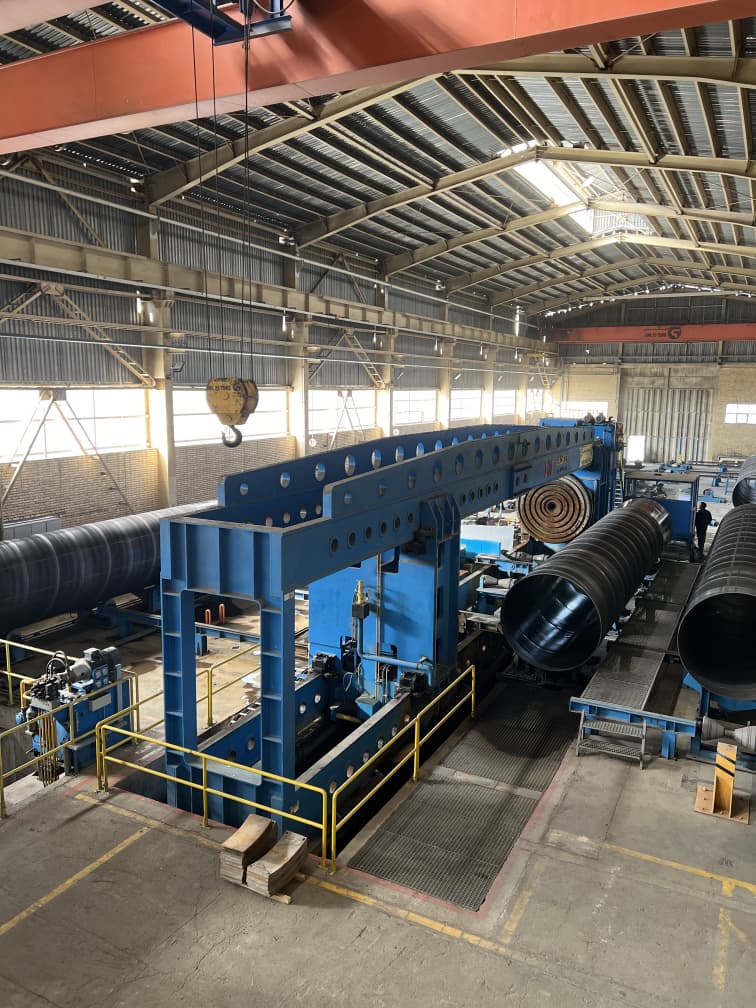
A smoother internal surface, especially in water transmission pipelines, reduces friction and improves hydraulic efficiency. Therefore, proper surface finishing and internal coating are essential elements of final spiral pipe quality.
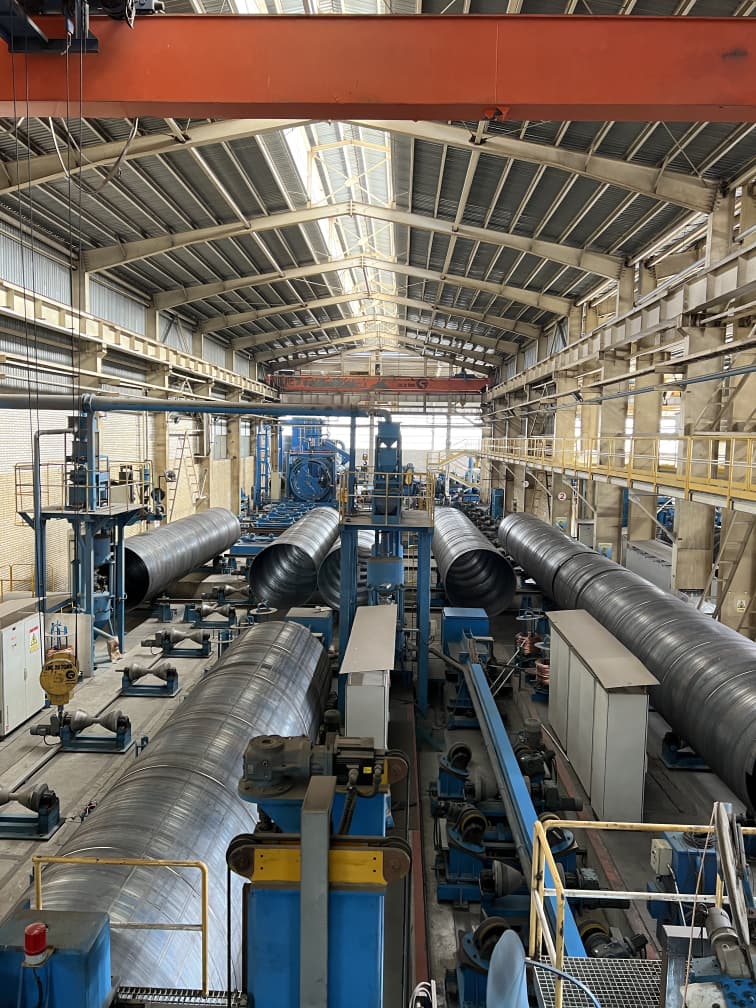
Parameter Thirteen: Compliance with Project Standards
In large-scale projects, pipes must comply with a specific set of standards and technical requirements. True quality is confirmed only when a spiral pipe simultaneously meets:
Client requirements
International standards
Project technical specifications
Engineers typically prefer manufacturers who offer flexibility in customizing technical specifications.
Parameter Fourteen: Traceability and Documentation
From a modern engineering perspective, quality without traceable documentation is incomplete.
A high-quality spiral pipe should be accompanied by:
A technical data sheet
Test reports
Raw material specifications
Production records
These documents play a critical role in risk control and operation management, especially in sensitive projects.
Parameter Fifteen: Manufacturer’s Practical Experience
Technical parameters gain real value only when they have been proven in practice. A manufacturer’s experience in real projects helps to:
Reduce common errors
Improve engineering decision-making
Ensure consistent final quality
Engineers usually place great importance on a manufacturer’s execution history and completed projects—not just theoretical specifications.
Conclusion
When spiral pipes are examined under engineers’ scrutiny, it becomes clear that final quality is not the result of a single factor, but rather the outcome of a chain of interconnected parameters—from steel plate selection to the final field weld at the project site.
The more complete and precise this chain is:
The lower the risk of failure
The higher the system safety
The lower the long-term project costs
For this reason, professional engineers evaluate spiral pipe quality not based on price alone, but on real performance over time.
To select a spiral pipe that truly matches the real conditions of your project, contact Mahyar Sepahan’s experts and benefit from specialized engineering consultation.