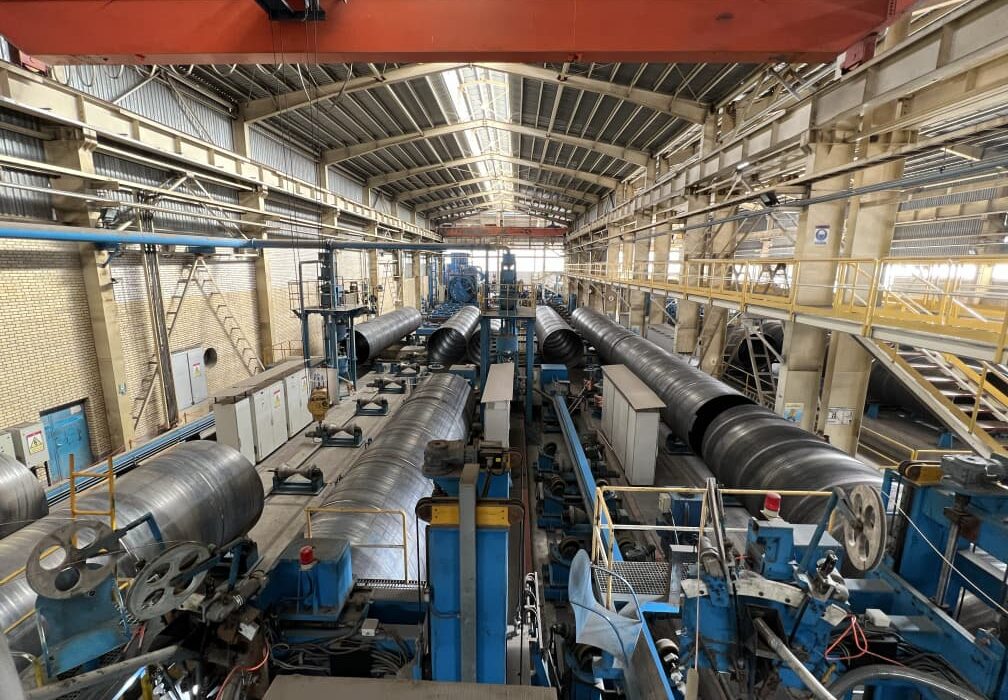
In heavy industries, the service life of equipment is not merely a technical indicator; it is a decisive factor in determining economic feasibility, operational safety, and system sustainability. Pipes, as critical components for the transmission of fluids, energy, and chemical substances, play a direct role in maintaining the continuous operation of industrial facilities.
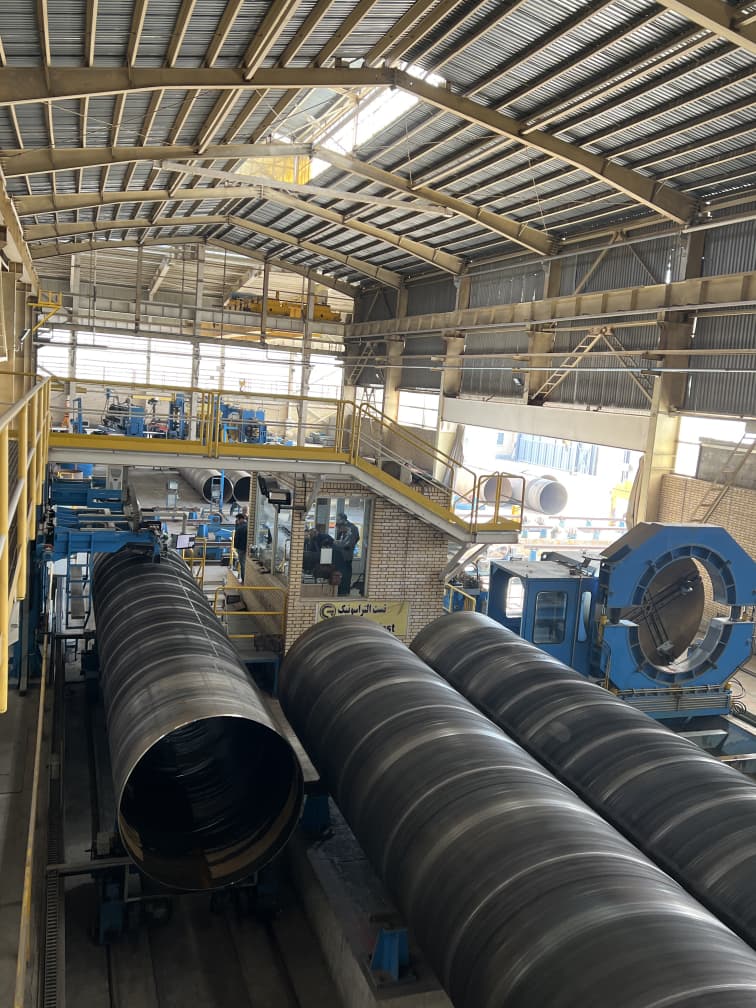
Among various types of steel pipes, spiral welded pipes are widely used in oil and gas, petrochemical, steel, power generation, and industrial infrastructure sectors due to their helical structure, capability of manufacturing in large diameters, and controllable mechanical behavior.
This article, based on academic research from Japan and Germany as well as industrial experience from leading countries, analyzes the service life of spiral pipes under harsh industrial conditions.

Engineering Definition of Spiral Pipe Service Life
Content list
According to engineering literature published by scientific institutions in Germany (such as RWTH Aachen and TU Munich) and Japan (University of Tokyo and JIS standard bodies), the service life of a steel pipe is defined as the period during which the pipe can operate under specified service conditions without unacceptable degradation in mechanical properties, safety, or functional performance.
This definition includes:
Allowable wall thickness loss due to corrosion
Integrity of welded joints
Ability to withstand internal and external pressures
Resistance to thermal and mechanical loads
Harsh Industrial Conditions and Factors Reducing Service Life
Industrial studies in Japan and Germany define harsh industrial environments as those in which pipes are simultaneously exposed to multiple damaging factors.
Major Stress Factors
| Factor | Engineering Impact |
|---|---|
| Variable pressure | Fatigue damage and microcrack formation |
| High temperature | Creep and strength degradation |
| Corrosive environments | Uniform and localized corrosion |
| Industrial vibrations | Accelerated crack growth |
| Mechanical shocks | Stress concentration in critical zones |
The combination of these factors can significantly reduce pipe service life unless appropriate engineering measures are incorporated during design and manufacturing.
Effect of Helical Structure on Stress Distribution and Durability
Analytical studies conducted at the Technical University of Munich indicate that the helical structure of spiral pipes leads to a more uniform stress distribution compared to longitudinally welded pipes. This results in:
Reduced stress concentration at the weld seam
Improved fatigue behavior under cyclic loading
Enhanced structural stability under variable pressures
Research results show that under cyclic pressure conditions, spiral pipes can achieve 15–20% higher fatigue life compared to longitudinally welded pipes of the same diameter.
Corrosion and Wall Thickness Loss in Industrial Environments
One of the primary factors limiting the service life of spiral pipes is corrosion. Japanese studies based on JIS standards and Asia–Pacific industrial research demonstrate that corrosion rate depends on fluid type, temperature, humidity, and environmental chemical composition.
Average Corrosion Rates (mm/year)
| Industrial Environment | Uncoated | Epoxy Coated |
|---|---|---|
| Industrial water | 0.10 | 0.02 |
| Mild acidic environment | 0.25 | 0.05 |
| Marine industrial environment | 0.30 | 0.04 |
These data indicate that proper coating selection can multiply the service life of spiral pipes several times.
Role of Welding Quality in Long-Term Stability
According to reports by the German Fraunhofer Institute, more than half of early failures in steel pipelines are related to welding quality. The use of Submerged Arc Welding (SAW) with strict control of parameters plays a critical role in extending the service life of spiral pipes.
Impact of Welding Quality on Service Life
Full and uniform weld penetration
Reduced metallurgical defects
Increased fatigue resistance
Lower risk of leakage and structural failure
Fatigue Life Analysis of Spiral Pipes
In industrial pipelines exposed to variable pressures and frequent operating cycles, fatigue life analysis is essential. According to DIN EN standards, fatigue resistance of spiral pipes depends on weld quality, surface smoothness, and wall thickness.
Fatigue Life Comparison (Number of Cycles)
| Pipe Type | Average Fatigue Life |
|---|---|
| Longitudinal welded pipe | 1.2 × 10⁶ |
| Standard spiral pipe | 1.5 × 10⁶ |
| Advanced-controlled spiral pipe | 1.7 × 10⁶ |
Performance at High Temperatures and Creep Phenomenon
Japanese power plant studies indicate that at temperatures above 400°C, creep becomes a dominant factor in determining pipe service life. Proper steel selection, wall thickness design, and weld quality control ensure stable performance of spiral pipes under such conditions.
With correct engineering design, spiral pipes can maintain stable operation for more than 25 years in high-temperature environments.
Integrated Service Life Prediction Model
According to German analytical models, the service life of spiral pipes is a function of several key parameters:
Service Life ≈ f (Steel Grade + Welding Quality + Corrosion Rate + Loading Conditions + Coating Type)
Engineering Case Example
Steel grade: API 5L X60
Coating type: FBE
Operating condition: Variable industrial pressure
Predicted service life: approximately 30–40 years
Effect of Combined Loads on Spiral Pipe Service Life
In real industrial conditions, pipes are rarely subjected to a single type of load. German research centers show that combined loads—including internal pressure, bending loads, axial forces, and thermal stresses—have the greatest impact on reducing service life.
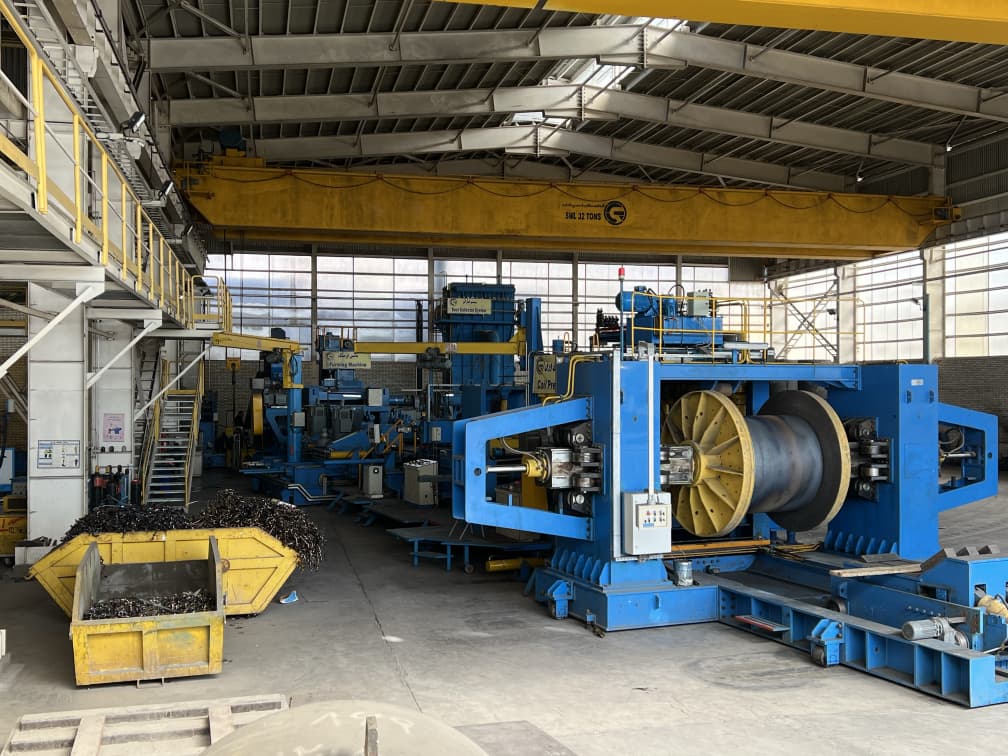
Due to the helical weld orientation, spiral pipes exhibit more balanced behavior under combined loading. The non-alignment of the weld seam with the pipe axis allows stresses to be distributed more uniformly, reducing stress concentration at a single point.
Behavior of Spiral Pipes Under Industrial Vibrations
In many industrial facilities such as refineries, petrochemical plants, and power stations, vibrations generated by pumps, compressors, and turbines are unavoidable. Research conducted at the University of Tokyo indicates that such vibrations can cause gradual growth of microcracks, particularly near weld zones.
In high-quality spiral pipes:
The helical weld path prevents vibration concentration along a straight line
Vibrational energy is distributed along the pipe body
Fatigue crack growth rates are reduced
These characteristics make spiral pipes suitable for vibration-intensive industrial environments.
Role of Heat Treatment and Metallurgical Control
German studies highlight the significant impact of microstructural control on spiral pipe service life. Proper post-weld heat treatment can:
Reduce residual stresses
Improve weld zone toughness
Enhance resistance to cold cracking
Pipes placed into service without adequate metallurgical control may exhibit reduced service life, even if wall thickness is relatively high.
Impact of External Surface Quality on Long-Term Durability
In open industrial environments, the external surface of spiral pipes is exposed to damaging factors such as:
Moisture
Chemical vapors
Corrosive airborne particles
Japanese industrial studies show that surface preparation quality prior to coating application is a decisive factor in the real durability of coating systems.
Improperly prepared surfaces:
Reduce coating adhesion
Allow gradual penetration of corrosive agents
Increase wall thickness loss rate
Life Cycle Cost Analysis (LCC)
From a German engineering perspective, service life is directly linked to life cycle cost. Selecting higher-quality spiral pipes may involve higher initial costs, but in the long term it leads to:
Reduced unplanned shutdowns
Lower maintenance expenses
Improved operational safety
Conceptual Life Cycle Cost Comparison
| Selection Type | Initial Cost | Maintenance Cost | Total 30-Year Cost |
|---|---|---|---|
| Medium quality | Low | High | High |
| Engineered quality | Medium | Low | Optimized |
Role of Monitoring and Maintenance in Extending Service Life
Joint German–Japanese studies show that even the best spiral pipes cannot achieve their maximum designed service life without proper monitoring programs. Methods such as:
Periodic wall thickness measurement
Scheduled non-destructive inspections
Control of operating conditions
can increase actual service life by up to 20%.
Difference Between Designed and Actual Service Life
A key concept emphasized in academic literature is the distinction between designed service life and actual service life. Designed life is calculated under ideal assumptions, while actual life depends on:
Execution quality
Operating conditions
Operational practices
Spiral pipes designed with conservative margins and manufactured to high quality standards minimize the gap between these two values.
Future Role of Spiral Pipes in Heavy Industries
Industrial forecasts in Europe and Japan indicate growing demand for pipes with long service life due to increasing needs for:
Energy transmission
Sustainable infrastructure
Reduction of long-term costs
Spiral pipes—especially when combined with advanced coating technologies and smart monitoring systems—will remain a key solution in heavy industries.
Extended Final Conclusion
Scientific and industrial analyses from leading countries show that the service life of spiral pipes under harsh industrial conditions is not the result of a single decision, but the outcome of a chain of informed engineering choices—from steel metallurgy and welding quality to coating systems, installation, and operational management.
The more complete and controlled this chain is:
The lower the risk of failure
The higher the system reliability
The better the long-term economic justification
For this reason, in advanced industrial projects, spiral pipes represent not only a technical solution but a long-term engineering investment.